 |
 |
 |
|
Major Immigrant Groups
European Contract Workers
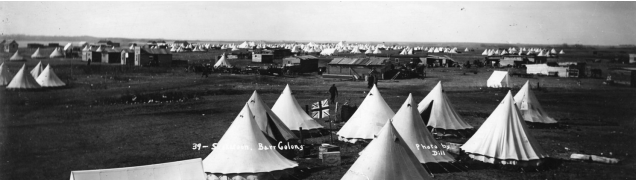
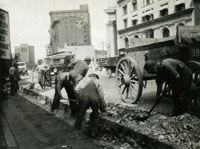
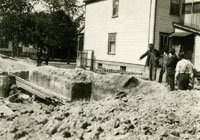
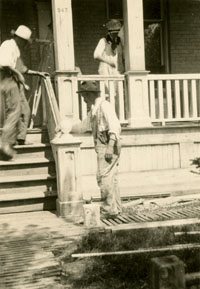
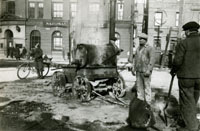
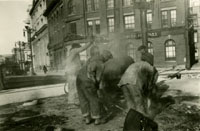
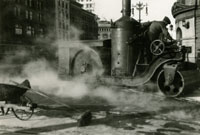
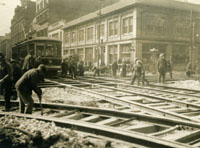
| After 1896, Canada encouraged the immigration of industrial labourers from numerous European nations. Canadian corporations, primarily railway companies, required a cheap source of labour so the Canadian government set out to fill this void with European immigrants. Canadian Pacific Railway (CPR) utilized Italian, Bulgarian, Ukrainian, and Polish immigrants, to name but a few nationalities who acted as workers on the construction of the railway. Mining corporations were partial towards Slavic and Italian workers. These workers were hired on contracts by labour agencies which meant they could be hired for low wages. These workers were known to work hard and live a simple life. | ||
 |
 |
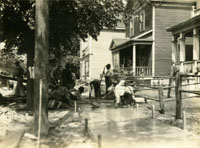 |
| Between 1900 and 1914, fifty to seventy thousand European immigrant workers came to Canada to work on the railways. By 1913, three hundred labour agencies in Canada recruited 200,000 immigrant workers every year, mostly for construction work. | ||
 |
 |
 |
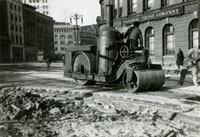
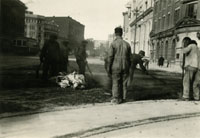
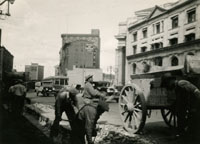
| Many European contract workers, mostly from western Europe and Britain, eventually complained about the low wages and poor working conditions they experienced. The governments in the homelands of these workers protested their poor treatment by untrustworthy labour agencies and employers in Canada. | ||
 |
 |
 |
| Labour agencies forced these workers to pay high agency fees. Also, agents received money in return for placing an immigrant in a construction camp where working conditions were extremely poor. Labour unions and native-born Canadians protested the usage of European contract workers. They did this because jobs that could have been given to Canadians were being given to the immigrants who were willing to put up with these terrible conditions. As a result, they pressured the Canadian government to put more restrictive immigration policies in place to limit the number of immigrant workers. | ||
 |
 |
 |


