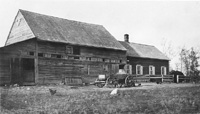
Major Immigrant Groups

The Mennonites

In order to attract certain European ethnic communities to immigrate to Canada, the government offered to set aside pieces of land called “block settlements”. Block settlements offered groups a chance to live in isolation, practice their religions, traditions, and customs, and live with one another without having to interact with other groups and nationalities. One such group that the government negotiated with was the Russian Mennonites.
 

Mennonites do not support and participate in most armed conflicts. At that time, Mennonites in Russia felt threatened by the increasing violence in their homeland and looked for chances to move elsewhere.

Click here to view newspaper clippings that further explain the history of Mennonites and their religion.

In order to attract these Mennonites to Canada, the government offered them exemption from military service, the freedom to practice their religion, complete control of their education system, free homesteads of 160 acres, and the right to purchase more land at a cost of one dollar per acre. Canada set aside two blocks of townships in southern Manitoba where these Mennonites could reside. The first was a block of eight townships on the east side of the Red River in the southeast part of Winnipeg. The second was a block of twelve townships, called the “West Reserve”. It was west of the Red River, along the international boundary between Canada and the United States Eight thousand Mennonites took the government’s offer and began to move to southern Manitoba in 1874 to live in these isolated communities.

Click here to view correspondence between the Canadian government and a group of Mennonites, in which Mennonites are urged to immigrate to Canada.