 |
 |
 |
|
Challenges Faced By New Immigrants
Climate and Environment
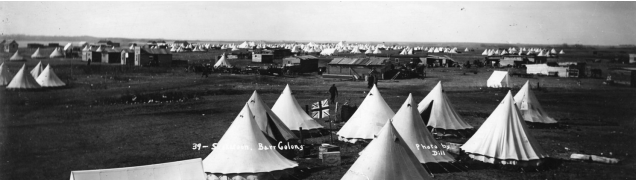
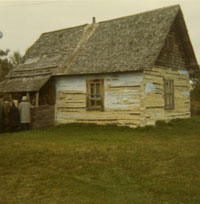
| We all know that Canada’s climate and environment can be quite harsh. Try to imagine the coldest day of last winter. Now try and imagine living in the middle of the prairies in a house that you had to build with your own bare hands without any money or tools, without the proper warm clothing, and without any prior knowledge of what a prairie winter was like. How warm would you be if you were in that situation? Would you be able to survive one night in these conditions? Thousands of immigrants who came to Canada faced these types of situations upon their arrival. It is a testament to their courageous nature that they were able to not only survive, but make valuable contributions to Canadian society. | ||
 |
 |
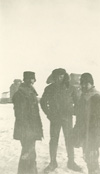 |
Summers on the prairies were no better. Hot and humid temperatures combined with the annual onslaught of pesky mosquitoes made for difficult times for immigrants. They had no air conditioning or bug spray to help them cope. And these were normal environmental conditions. There were times of extreme rainfall when farming was impossible. Floods would occasionally devastate certain regions. At the other extreme, periodic droughts would force immigrants to live meagerly for the rest of the year as their crops would not grow in such conditions. Outbreaks of disease were common among immigrants for reasons such as these.
| Certain areas of the prairies were more suitable for farming than others. The Icelanders who moved to the Lake Winnipeg area discovered this when they had to depend on fishing to make a living since the land in the area was not agriculturally adequate. The American ranchers who settled in the Palliser’s Triangle area in Saskatchewan and Alberta also realized that the area was not suitable for most types of agriculture due to the extremely dry and arid conditions but were able to successfully farm the land utilizing dry-farming techniques. | |
 |
 |
Many
immigrants were unaccustomed to these harsh climatic and environmental
conditions. They did not face these types of conditions in their homelands
and those agents who recruited them to immigrate to Canada did not
warn them prior to their journey. They were also shocked by the large
open spaces of the prairies and had to cope with feelings of isolation,
something many were unaccustomed to in their tight-knit communities
back home. But through a combination of positive attitude, determination,
ingenuity, and strong work ethic, many immigrants were able to overcome
these types of hardships and persevere.


